Blog
How to turn your garden into a spa

It often feels like life is only getting more hectic for all of us, not less. It’s understandable then that more of us than ever are looking to make our homes as zen as possible, and creating a spa garden is one excellent way of doing this. So here’s how to turn your garden into a spa…
Spa-dens began emerging as a garden trend last summer, but this year things are going up a notch. Combine the wellness elements of a spa and the calming properties of the outdoors, and you’ve got yourself the ultimate in relaxation. Mirela Bajic, Senior Garden Designer at House Designer explains, ‘I’ve seen a noticeable shift recently in how people approach their outdoor spaces. Rather than focusing purely on aesthetics or entertaining, more clients are now asking for gardens that feel calm, private, and restorative, perhaps as an antidote to the chaotic outside world.’

If you’re wondering how to turn your garden into a spa to enjoy all the zen you can find then, there are many ways this can be done; and on all budgets, too.
A spa garden’s main aim is to promote wellbeing and relaxation, and to cultivate a healthier mind and body. But it should also engage with the outside world in a way that is natural and restorative. So whether you’re looking to emulate parts of your favourite hotel spa garden into your own space, or simply want to add a few plants that promote a moment of calm, this is how to turn your garden into a spa…
1. Prioritise your garden furniture
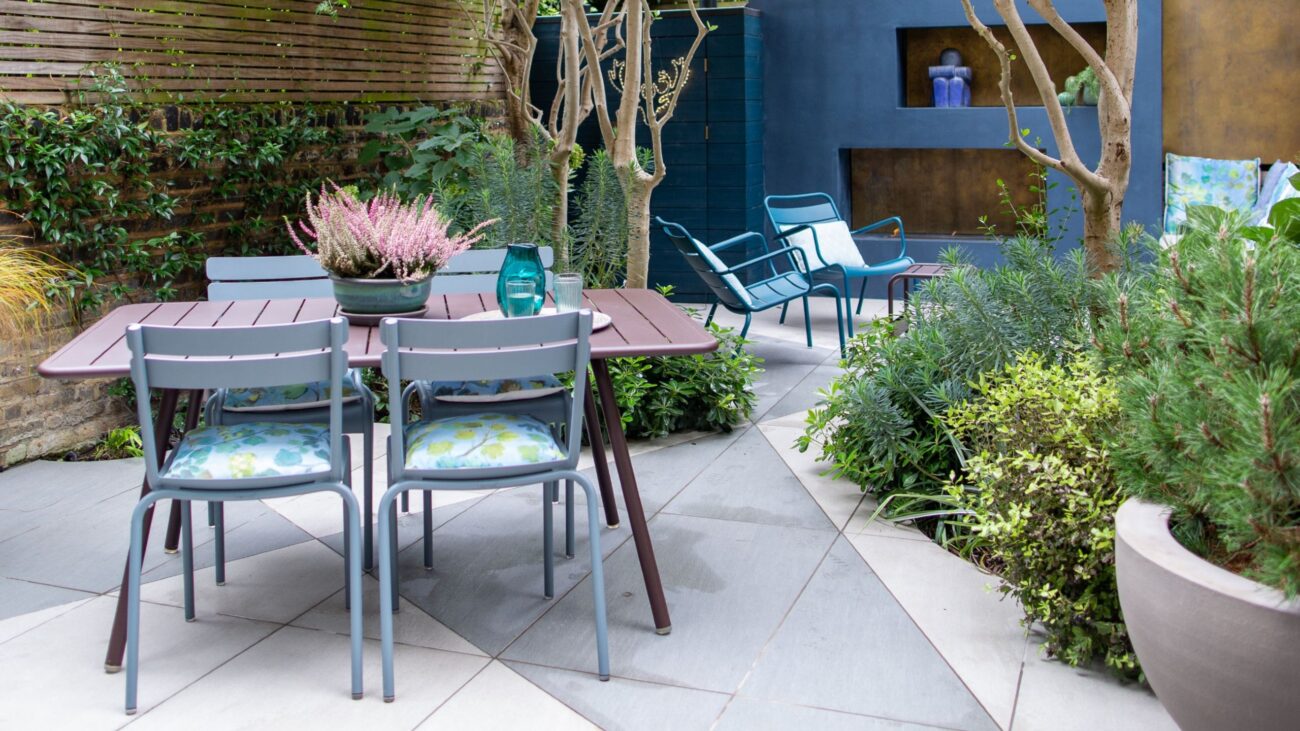
You should carefully consider the best garden furniture, especially as it is arguably the most practical part of a spa garden. ‘Why not add a nice day bed with an outdoor mattress and blankets, and some candles on a coffee table?’ garden designer Emily Hillier suggests. ‘You can also add a hanging chair with lots of cushions for relaxation.’

(Image credit: Future PLC / Tim Young)
Kris Manalo, head of design at homeware and furnishings company Atkin and Thyme, agrees that certain garden seating ideas are vital when planning how to turn your garden into a spa. ‘Opt for simple, curved silhouettes to create a more serene and inviting setting. Specifically, think pared-back modular dining sets with a compact coffee or side table, next to an arrangement of plants. Or, if your space allows, tuck a cosy cocoon or egg chair into a quiet corner; they’ll send you straight to sleep.’
She explains that certain materials are ideal for your outside, spa-like setting. ‘Where possible, choose organic materials that are timeless yet durable, such as rattan weave, rope effect detailing or powder-coated aluminium,’ she says. And when it comes to the colours you should use, Kris recommends, ‘opt for a soft neutral colour palette that feels calm and peaceful, just like the best spas do, such as soft grey, warm stone or sandy tones.’

(Image credit: Future PLC / Darren Chung)
Purchasing new outdoor furniture can be pricey, but even one new item can boost the spa-like feel of your home, and egg chairs can be found for as little as £125 at places like Dunelm or Aldi.
Where you put the furniture is just as important as the type you have. ‘Positioning benches or chairs in naturally quieter and sheltered areas of the garden, away from road noise and neighbours, and close to calming elements like water fountains can help create cosy seating areas that offer a sense of privacy,’ Alex Bridgman, CEO of Bridgman says.
2. Utilise a water element for a real sense of calm
Adding a water element to your garden is one of the most effective ways to create a day spa look and feel, with the trickle of water known to be incredibly soothing. Alex Kemsley, Managing Director of Compass Pools by Waterstream, explains that more and more people in the UK are looking to install pools in their homes for this very reason. ‘The movement, reflections and gentle background noise of water all create an atmosphere that feels more settled,’ he says.
Of course, pools are a big expense (it’s best to set aside up to £150,000), but if you have the money to spend, nothing will make your garden feel more like your favourite hotel spa. To best incorporate a pool in your outdoor space, Alex advises, ‘in residential settings, pools tend to look best when they’re visually connected to planting, terraces and architecture, so the eye moves naturally across the space instead of being drawn straight to the water. That’s very similar to how hotel spa gardens are planned.’

(Image credit: Holly Jolliffe Photography)
When it comes to the design of the pool, Alex advises against light colours. ‘Over the past few years, we’ve seen a move towards darker pool shells, particularly soft greys and anthracites. Once filled, these finishes take on much more depth than traditional blue, reflecting the sky and surrounding landscaping,’ he says.
And if you don’t have the space and budget for a full-sized pool, there are absolutely other options for water feature in small garden ideas too. Alex Kemsley notes that ‘not every garden or budget can accommodate a full swimming pool, particularly in tighter urban plots, and in these smaller gardens, compact plunge pools and swim spas can still bring many of the same spa-like benefits,’ he says. These are more economically viable, with most costing around £35,000 – £60,000.

(Image credit: Future PLC/Colin Poole)
Emily agreed that there are so many options for a wellness-style water feature that can better suit smaller budgets and spaces. ‘I’m seeing a rise in people wanting hot tubs, cold baths, outdoor showers; even in the smallest gardens, we are finding space to include these. A pergola over a hot tub is a great idea if you’re overlooked,’ Emily suggests. ‘You can add wooden slats wherever you need the privacy, and they create beautiful dappled light on a sunny day.’
And for the most modest budgets, a water feature idea is still incredibly effective at creating that zen, spa-like feel; even if you can’t swim in it! Emily suggests, ‘you could have a beautiful Zellige tiled water feature surrounded by plants. Or, for a super easy option, you can add a large rusty water bowl into a planting bed, to reflect the garden and the light.’
3. Incorporate natural biophilic lighting
Most spa gardens do all they can to utilise the natural lighting that the space is lucky enough to get throughout the day – but when the sun goes down, you still want to be able to enjoy your outdoor spa. ‘Lighting often becomes the final layer that pulls everything together, and in spa environments, light is used to promote a relaxing atmosphere,’ Alex Kemsley says. For the experts, the key is soft yet functional lighting solutions.

(Image credit: Future PLC/Katie Lee)
Placement is important, with Alex suggesting placing fixtures close to the ground. ‘Low-level lighting that allows any water in the space to glow rather than sparkle creates a much calmer mood, and softly lit borders help the space remain usable without feeling overstimulating,’ he says.
For Kris, embracing the biophilic trend is key to creating the right type of zen in your garden. She explains to us, ‘This style of lighting mimics the qualities and patterns of the natural light cycle by using warm tones and soft brightness levels. This layered approach creates a soft glow and a tranquil ambience,’ Kris continues.
In practice, this means opting for warm bulbs rather than anything too harsh, and leaning into organic materials for your light fittings. ‘For example, a patio or wall lamp in a rattan weave, paired with festoon lights hung through tree branches, is a beautiful way to create a whimsical, spa-like setting,’ Kris says.
Helpfully, this tip is one that can be taken advantage of in any space, be it a small city balcony or a large countryside garden. And lighting can be as pricey or inexpensive as you want. These recessed deck ground lights from Pooky will set you back £52 each, but you can also purchase a pack of pathway stake lights from B&A for just £24 that are easy to install in the ground.
4. Prioritise privacy and pathways for the layout

(Image credit: Future PLC / Darren Chung)
The layout of your garden is just as important as its individual elements if you’re considering how to turn your garden into a spa, the experts explain. So what can this look like in practice? Mirela suggests putting privacy and cosy nooks at the heart of your garden design.
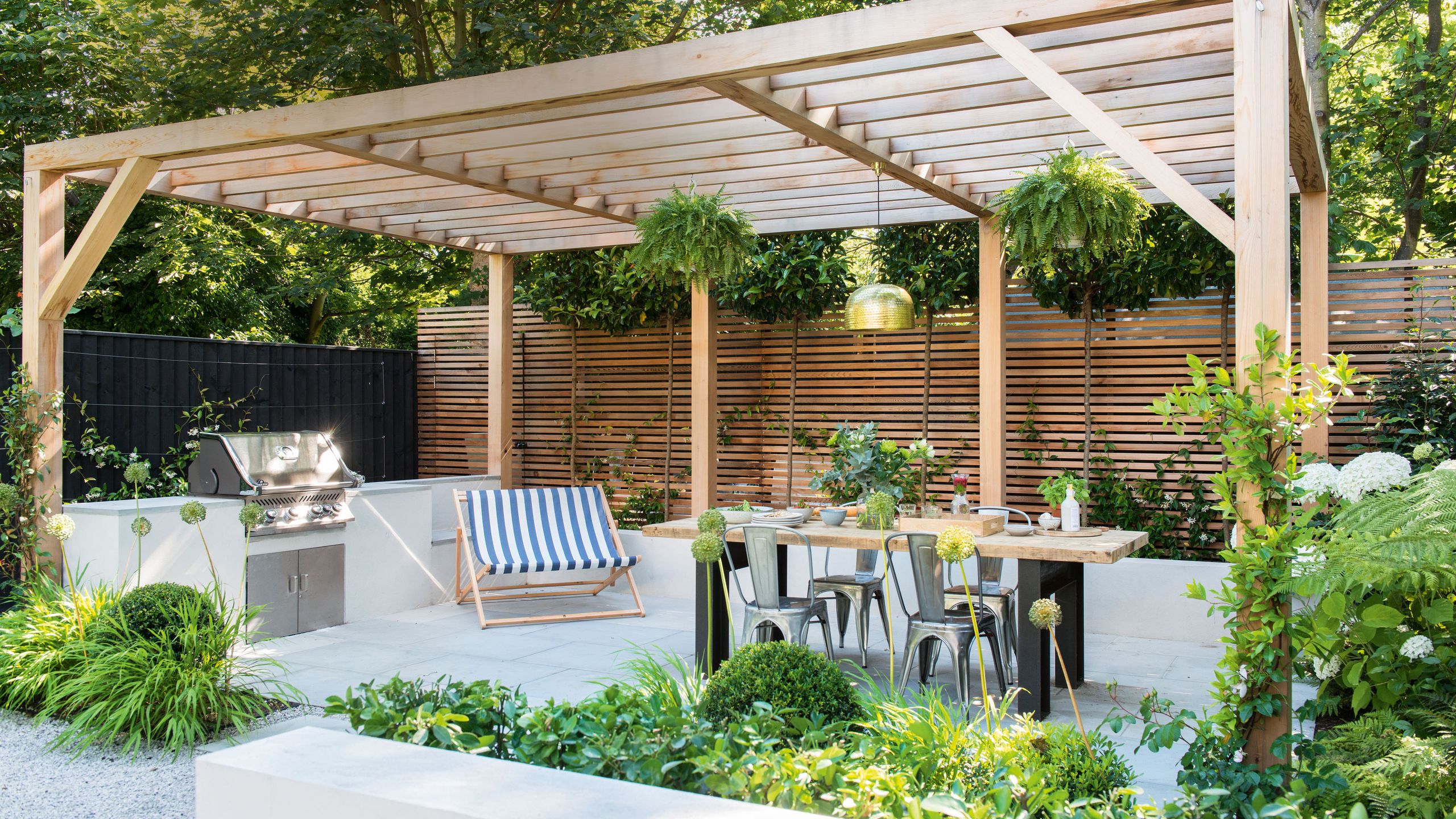
She explains, ‘without that sense of enclosure, it’s difficult for a garden to feel truly relaxing. This can be achieved through planting, screening, or a combination of both, depending on the size and setting, and can be achieved in any space, no matter the size or budget.’ Garden screens, for example, can be purchased for as little as £30 each.

(Image credit: Thyme Meadow Spa / Freddie Ellams)
Alex Bridgman agrees, explaining that slightly more expensive options can be incredibly helpful too, if you have the money to spare. ‘Pergolas or garden structures can also be used to define outdoor zones, creating intimate, quiet spaces that feel enclosed. These vertical elements not only add architectural interest and height but also subtly improve acoustics, making the garden feel more cocooned and peaceful,’ he concludes.
Whimsical paving throughout your spa garden, as opposed to a more blocky design, can also be incredibly useful in creating a calming atmosphere, Head Gardener at luxury spa hotel South Lodge, Paul Collins, explains. ‘Creating meandering paths that invite you to wander can also help the garden feel immersive and restorative, rather than something simply to look at,’ he says.
4. Consider movement and soft fragrance for your planting
Plants, flowers and greenery are obviously a huge consideration when creating your at-home oasis, and soft, flowing, ‘undone’ texture is what it’s all about for a spa-like setting.

(Image credit: Future PLC)
‘Layered greenery, simple palettes, and movement from grasses or looser planting styles tend to create a more calming atmosphere than highly structured or busy schemes,’ Mirela says.
Paul agrees that less is generally more. ‘A spa garden should feel intuitive and calming rather than over-designed,’ he says. ‘Focus on engaging the senses through gentle movement, sound, scent and texture, using fragrant planting such as jasmine, lavender and burkwood osmanthus to add softness and perfume to the air.

(Image credit: Future PLC / Colin Poole)
‘Ornamental grasses such as miscanthus sinensis ‘Ferner Osten’, miscanthus sinensis ‘zebrinus’ and deschampsia cespitosa bring movement and rhythm as they sway in the breeze, while repeated planting creates a sense of flow,’ he continues.
If you have a slightly higher budget and more space, you can add more expensive plants, and even trees, too. Paul suggests, ‘for a Mediterranean feel, olive trees and agapanthus add structure and elegance, while small specimen trees such as japanese maple, chinese dogwood and juneberry bring seasonal colour, shape and softness to balance harder landscaping.’
6. Weave an outdoor sauna seamlessly into the space
As well as a water element, a sauna can be an incredible addition when considering how to turn your garden into a spa, to create an intentional space to relax. They’ve become so popular that you can even purchase at-home saunas from John Lewis.

(Image credit: Finnmark Sauna)
There are a myriad of wellness benefits that can be gleaned from a sauna, Jake explains. ‘The heat in a sauna encourages the body to slow down, and that shift alone can have a noticeable effect on how you feel. With regular use, it tends to support better sleep,’ he says. ‘There is also strong evidence linking sauna use with lower levels of anxiety. The experience is also physical and immersive, which makes it easier to switch off in a way that feels natural rather than forced.’
The most important consideration when installing a sauna in your spa garden at home is to ensure it fits seamlessly into the space. ‘The key thing is that it shouldn’t feel like something that’s been added in afterwards,’ Erin Hickman, sauna designer at Finnmark Sauna, says.
‘Right’ all depends on your garden’s style. ‘In gardens with softer planting and a more natural feel, barrel saunas tend to sit more comfortably,’ Erin explains. ‘The shape breaks up the lines and feels less formal when it’s surrounded by greenery. In more structured spaces, especially where there’s paving or a strong architectural layout, a smaller cube sauna usually works better,’ she continues. Practically, access should also be thoroughly considered before installation. ‘If it’s easy to get to from the house, you’ll use it far more often,’ Jake Newport points out. ‘That matters in winter especially, when you don’t want to be crossing a wet or awkward path.’

(Image credit: Future PLC / Mary Wadsworth )
Saunas are quite obviously a big expense for a spa garden, and are likely to only be a consideration for those with more available to spend. Finnmark explain that their prices range from £3,329 for a 2-person sauna, ‘ideal for people working with a tighter garden space’, all the way up to £18,000, for a 6-person unit. However, they explain that most people spend around £4,350 for their classic barrel style model.
If this is the spa element you’re most keen on, it’s not as complicated to install as you may think, either. ‘There’s also a common assumption that planning permission will be an issue,’ Erin says. ‘In many cases, saunas fall within permitted development as long as they meet standard size and placement guidelines. It’s still worth checking with your local authority however.’
How much does it cost to build a spa at home?
You can spend as much or as little as you want on building your version of an at-home spa.
For those with more modest budgets, adding spa-like plants, as well as some soft, low-level lighting, may be all it takes to create a more zen environment in their outdoor space. And this can cost as little as £50-£100, or as much as a few hundred pounds. It all depends on how big a space you have to fill, and how much you are willing to spend.
For those with medium budgets, building a garden spa could include slightly more work, such as buying new garden furniture or adding a water element, be it a water fountain, an outdoor shower, or even a cold plunge pool. These elements together could cost anywhere from £4,000 all the way to £20,000, depending on how much you personally want to spend.
And for homeowners with more cash, an at-home garden spa can cost as much as you want, especially if you lean into premium units and furniture, lavish garden design, and if you have a big space to design. An immaculately designed spa garden, with beautiful furniture, a myriad of trees and plants, gorgeous lighting, and multiple separate spa elements, such as a pool, hot tub or sauna, could cost upwards of £170,000.
Do I need planning permission for a hot tub?
Most hot tub installations will not require planning permission, as they are typically allowed in gardens within permitted development rights, which allow certain smaller additions and changes without permission. But there are caveats to that general rule, meaning it is well worth checking with your local authority before installing one.
One instance where planning permission may be required is if you live in a listed building or if you reside in a conservation area. So if you are aware of any possible limitations like this, it’s always important to check before even purchasing a hot tub.

(Image credit: Future PLC / Douglas Gibb)
Something that may make a hot tub installation trickier is whether or not you are planning to install any kind of decking or outbuilding around the hot tub, or are looking to place the tub within a pre-existing outbuilding. In this case, you would likely need further investigation into whether planning permission is required for the outbuilding or decking on its own.
Emily also suggests that even if you don’t need planning permission, there are other practical considerations when installing a hot tub. ‘You should always check access when buying large bulky items, such as a hot tub. For example, it will cost a lot if you have to crane a hot tub over the house, so be sure to factor installation into your budget for any awkward spaces to access.’
What can I have in a spa garden instead of a hot tub?
If a hot tub isn’t your thing, there are so many options for adding the calming feeling of flowing water into your spa garden, all of which suit different budgets and space options:
- Swim spa: If you have a larger budget and want something a little more luxurious than a hot tub, a swim spa is an ideal option. Swim spas can be installed both above ground and in line with the ground like a typical pool, and are sized halfway between a hot tub and a proper swimming pool. The water can be adjusted to act as a hot tub for relaxing moments, or you can programme it to push out a soft current, which allows you to swim in it for exercise. These will typically set you back around £35,000, on average.
- Swimming pool: For those with the largest budgets, a swimming pool is a no-brainer for the ultimate spa-like feel, despite not typically offering the warm environment of a hot tub. Most pools will cost up to £150,000 and above to install, including paving the area around the pool and factoring in practical considerations like filtration.
- Natural pool: For the more holistic and nature-inclined among us, a natural swimming, or wild pool in their garden can be an incredible alternative to a hot tub. Natural pools or ponds are simply pools filled with water and a myriad of plant life, to emulate a natural body of water found outdoors. These are perfectly safe to swim in, filtered by the plants specifically chosen, and are a great way to be at one with nature. A wild swimming pool will likely cost you anywhere from £50,000 to £100,000 depending on its size and installation complexity.
- Plunge pool: Often referred to as a cold plunge, or a cold plunge pool, these can be an excellent way of bringing the feeling of water and wellness into your spa garden, and are a similar size to a hot tub. Often costing significantly less than the above options (typically anywhere from £3,000 – £20,000), they still evoke the same calming presence as a hot tub, and can provide particularly effective wellness benefits, with cold water immersion said to be an excellent way to tackle anxiety and aid exercise recovery. They can also be fairly compact, so can even work well in small gardens, like a hot tub.
One of the easiest and cheapest options for creating a spa garden that isn’t a hot tub, is an outdoor shower, which can be as cheap as a few hundred pounds, but can feel just as luxurious. Particularly attractive on warm summer days, outdoor showers can be incorporated into gardens seamlessly with up-scale paving and landscaping, and privacy screens made from organic materials.