

Blog
Why There’s Simply No Need For Traditional Toasters Anymore

We may receive a commission on purchases made from links.
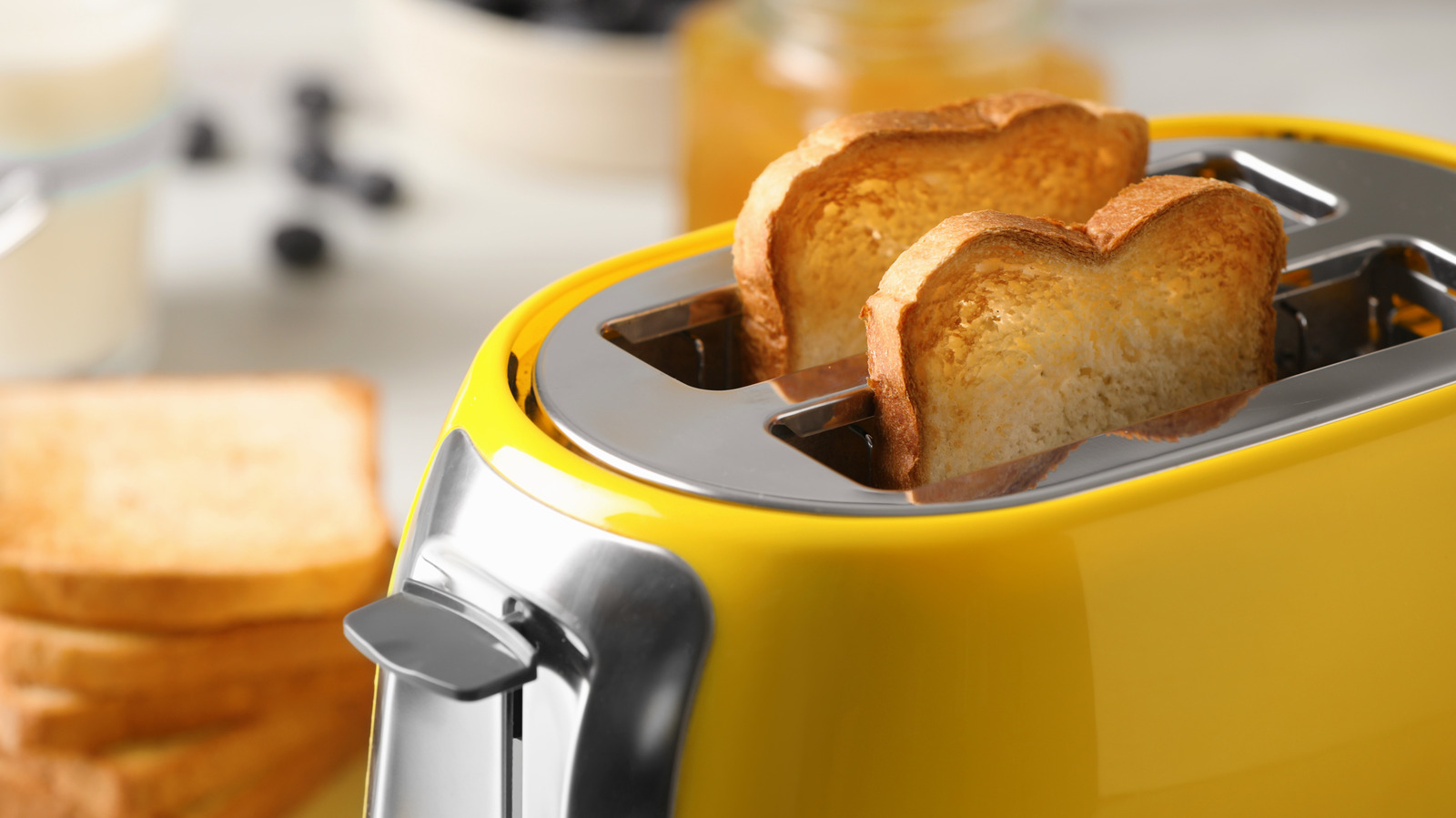
For over a hundred years, toasters have been considered an important countertop kitchen appliance. I don’t think they’re necessary anymore. In most homes, toasters are just a vestige of the past, a historical artifact taking up valuable countertop real estate.
Kitchen appliances are reflections of human culture and technological evolution. They’re invented to meet a moment, and go on to define how the people of that time period eat, and the spaces they live in. The relevance of any given machine fades, as our cultural needs change and we invent better tools; the toaster is a relic of a system the sun has set on. A slot toaster performs one narrow task, but demands a permanent footprint in the high-traffic zone of utility. That trade-off made sense when mid-century kitchen design prioritized futuristic-at-the-time gadgets: those specialized, single-task appliances that aspired to replace elbow grease, many of which have faded into irrelevance — the electric can openers, bread machines, ice cream makers, waffle makers, and panini presses of the world.
If all you ever do is toast sliced bread, and you do it every day, then a toaster still works. It pops out fast and doesn’t need any oversight or technique. But these days, we have a plenitude of more efficient and better-designed machines that not only handle the singular task of toasting a slice of bread, but also numerous other common cooking tasks. A convection toaster oven, for example, can toast several pieces of bread perfectly, and it can also handle non-standard shapes of bread, like rolls, baguettes, and rough-hewn slices from rustic loaves. But it isn’t limited to toasting bread, and that’s why it justifies itself as something worth spending money on that can live on the counter all the time.
The toast of the town, for a time
The toaster rose to ubiquity alongside another very specific evolution in how bread was made and sold. In 1928, inventor Otto Frederick Rohwedder introduced the first commercially successful sliced bread machine, and by 1930, companies like Wonder Bread were selling uniform, pre-sliced loaves across the country.
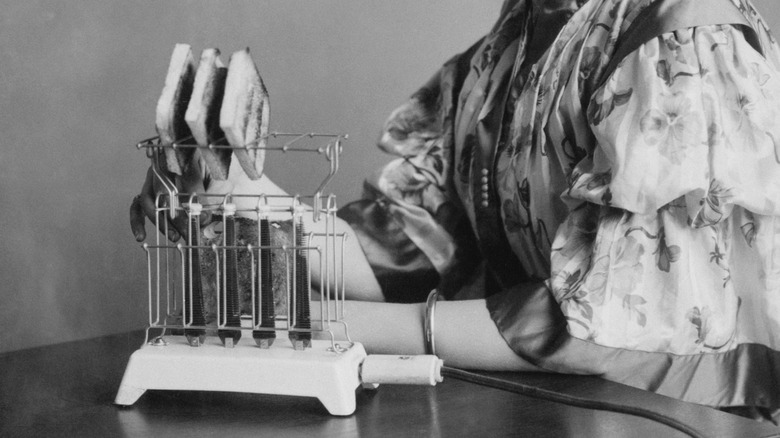
Various iterations of electric toasters had been in use since the early 1900s, but, like a lot of the devices during early home electrification, they were precariously rudimentary — open-wire devices, with exposed heating elements. Some early models even required you to flip the bread halfway through. But by the 1930s sliced bread era, their design had been refined to the recognizably enclosed, automatic appliances with built-in timers and spring-loaded pop-up mechanisms. These machines spit out consistently golden toasts and were harder to accidentally injure yourself on. Every well-appointed kitchen had to have one.
Sliced bread was an industrially-standardized food product that fit perfectly, hand-in-glove, inside a personal appliance that automated an everyday activity and, more broadly, helped establish a new kind of kitchen. The technologically advanced mid-century kitchen was an optimistic one, no longer organized around the tending of a central hearth, but bejeweled with specialized, electronic tools designed to serve specific tasks. The toaster held court both because it did its single job efficiently, and because people were suddenly eating sliced bread, which made the efficiency meaningful. Kitchens and eating customs have continued to evolve, and so have the tools available to us.
Counter culture
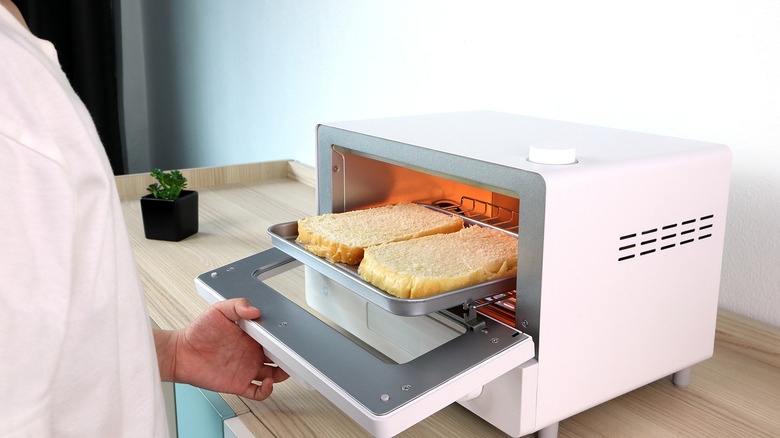
Most weeknight dinners involve heating up a smaller portion of food at some point, whether that’s toasting nuts or seeds, roasting veggies, or heating up a frozen protein or leftovers. A convection oven is more efficient for those tasks than turning on the big oven, and I think the texture turns out better than microwaves. You can technically use an air fryer to toast bread, but it’s still more constrained than a convection toaster oven, which I would argue is the single most broadly useful dry-heat kitchen appliance.
Working in professional kitchens for years taught me to evaluate space very shrewdly, because the stakes are high and low-utility, status-symbol gadgets just get in the way. The counter space is as much of a tool as any appliance, and if you’re sacrificing it for the footprint of a machine, there better be a good reason. I’ve also moved houses multiple times, often within tiny-kitchen areas like New York City, and when you’re setting up a kitchen from scratch, you start with the very basics, not the trendy or “nice to have” appliances. Once you get by without them, you question if you need them at all.
At one point, my kitchen was so tiny there wasn’t even space for my beloved convection oven, so I went super low-tech and got a stovetop toast contraption. It may or may not be meant for camping recipes, but it works perfectly. It’s a square of two layers of stainless steel, perforated with small holes and a folding handle. It was cheap and will probably last forever. Counter space isn’t infinite, and every appliance should justify itself. In a modern kitchen, a convection toaster oven earns its keep and kicks the toaster to the curb.