Blog
For many Americans, ‘one more round’ no longer serves their lifestyle or budget

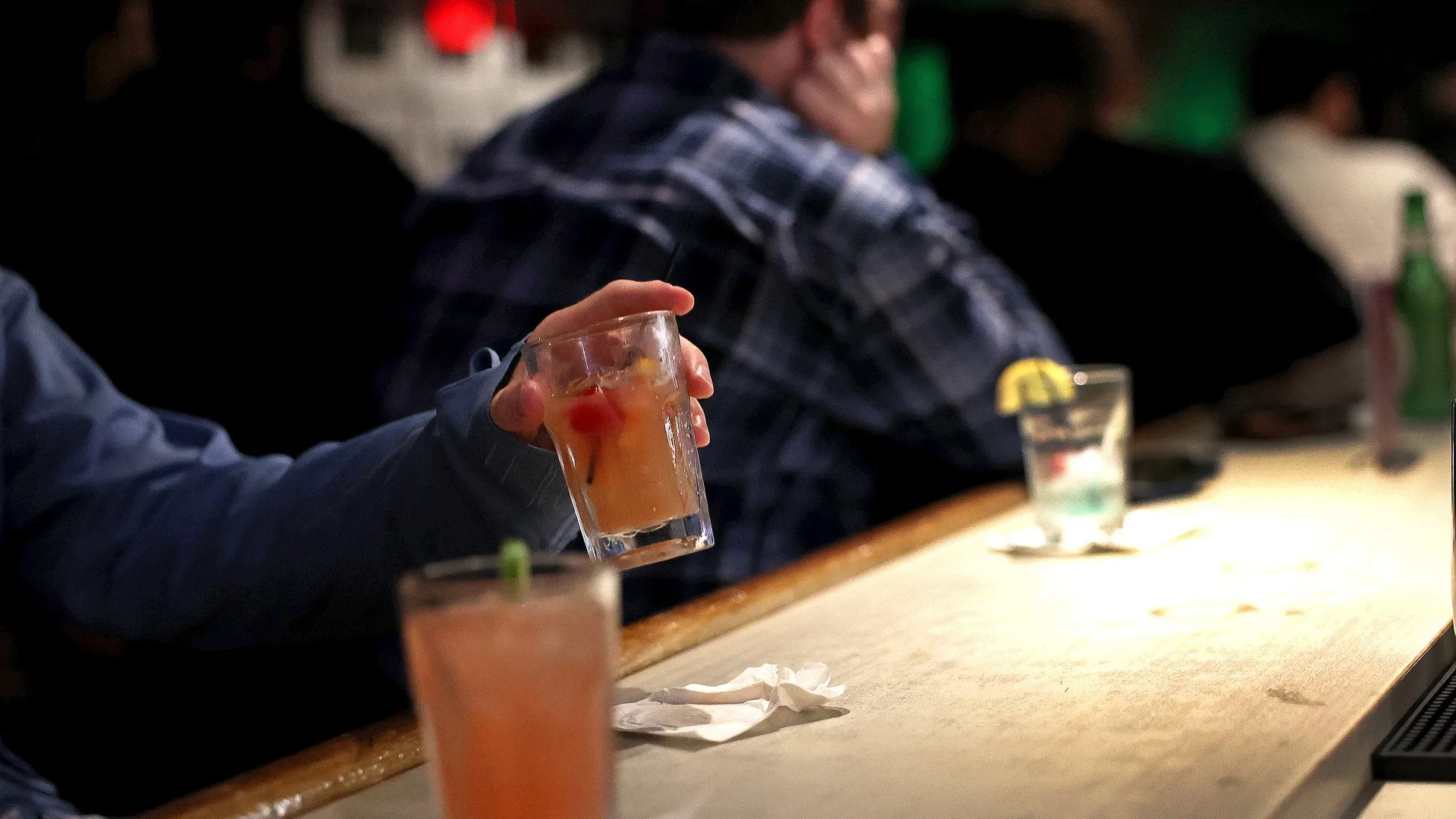
Americans consumed 5% less alcohol by volume last year than the year before, according to new data released Monday by IWSR, a beverage alcohol data and analytics firm.
But this new abstinence may have less to do with people wanting to stay sober than with basic economics.
Regardless, sales are on the rocks across the booze aisle.
Consumption of beer and wine dropped the most, 6% over the year, while spirits fell 4%. Even ready-to-drink cocktails — premixed drinks such as canned cocktails and hard seltzers — slipped by 1%, despite top-shelf gains in recent years.
Alcohol consumption dropped in 49 states last year, according to Monday’s report. Only Nevada saw growth, perhaps because what happened in Vegas stayed there.
Download the SAN app today to stay up-to-date with Unbiased. Straight Facts™.
Point phone camera here
These were sobering realities for the $110 billion-a-year U.S. beverage alcohol industry, which, according to NielsenIQ, a consumer intelligence company, saw off-premise alcohol sales drop 3.4% in 2025.
Are Americans sobering up or just priced out?
Tighter household budgets are watering down alcohol demand, according to Marten Lodewijks, president of IWSR.
“Affordability concerns are forcing many consumers to cut discretionary spending,” he said, “and this is putting the beverage alcohol industry under pressure.”
Lodewijks said the number of Americans who drink is not changing. “Instead, we’re finding that more people are drinking less often, and enjoying fewer drinks when they do.”
Matt Gacioch, the staff economist for the Brewers Association, agreed that personal economics play a role, but consumer behavior around drinking “continues to evolve rapidly in the US.”
However, David Ozgo, president of Advocacy Analytics LLC and former chief economist of the Distilled Spirits Council of the United States, told Straight Arrow that the industry’s hangover is only partly about affordability.
A 5% annual drop in alcohol volume “is an awfully big number,” he said. Even during recessions, Ozgo said, overall consumption doesn’t typically drop that steeply, although consumers might switch to lower-priced brands.
Ozgo said one major factor is that Americans are spending a lot less time socializing face-to-face, which is a big driver of alcohol consumption. He also attributed falling sales to the downturn in overall U.S. consumer confidence, which hit a new low this month, according to the latest consumer survey by the University of Michigan.
There is also ample evidence that many Americans, especially Gen Z and Millennials, are breaking up with alcohol. A Gallup poll published in August 2025 found that the percentage of U.S. adults who say they drink alcohol, at least on occasion, had fallen to 54%, the lowest in Gallup’s nearly 90-year trend. That share was 62% in 2023 and as high as 71% in the early 1980s.
Those who do drink report drinking less, according to Gallup. Among drinkers, 24% said they had consumed alcohol in the previous 24 hours, a record low, while 40% said it had been more than a week since their last drink.
This drop in alcohol use appears to coincide with recent research indicating that any level of alcohol may negatively affect health. For the first time, Gallup noted, a majority of Americans polled said that even drinking in moderation is unhealthy.
The downward trend could continue as younger Americans increasingly say no to booze, studies have found. Only 50% of adults between ages 18 and 34 said they drink alcohol, while the other half said they abstain completely, according to Gallup. Just two years earlier, 59% of that age group said they drank booze.
Will booze bounce back?
Lodewijks acknowledged that beyond affordability concerns, “moderation trends are also playing a role” in the drop in alcohol consumption. But he said, “when consumer confidence rebounds, we expect volumes in many categories currently in decline to start growing again.”
Ozgo agreed that it’s too early to declare last call on America’s drinking culture.
“These things tend to go in waves,” he said. “I strongly suspect that at some point, face-to-face socialization is going to be fashionable again. And at that point, I think you will see this return back to traditional drinking patterns.”